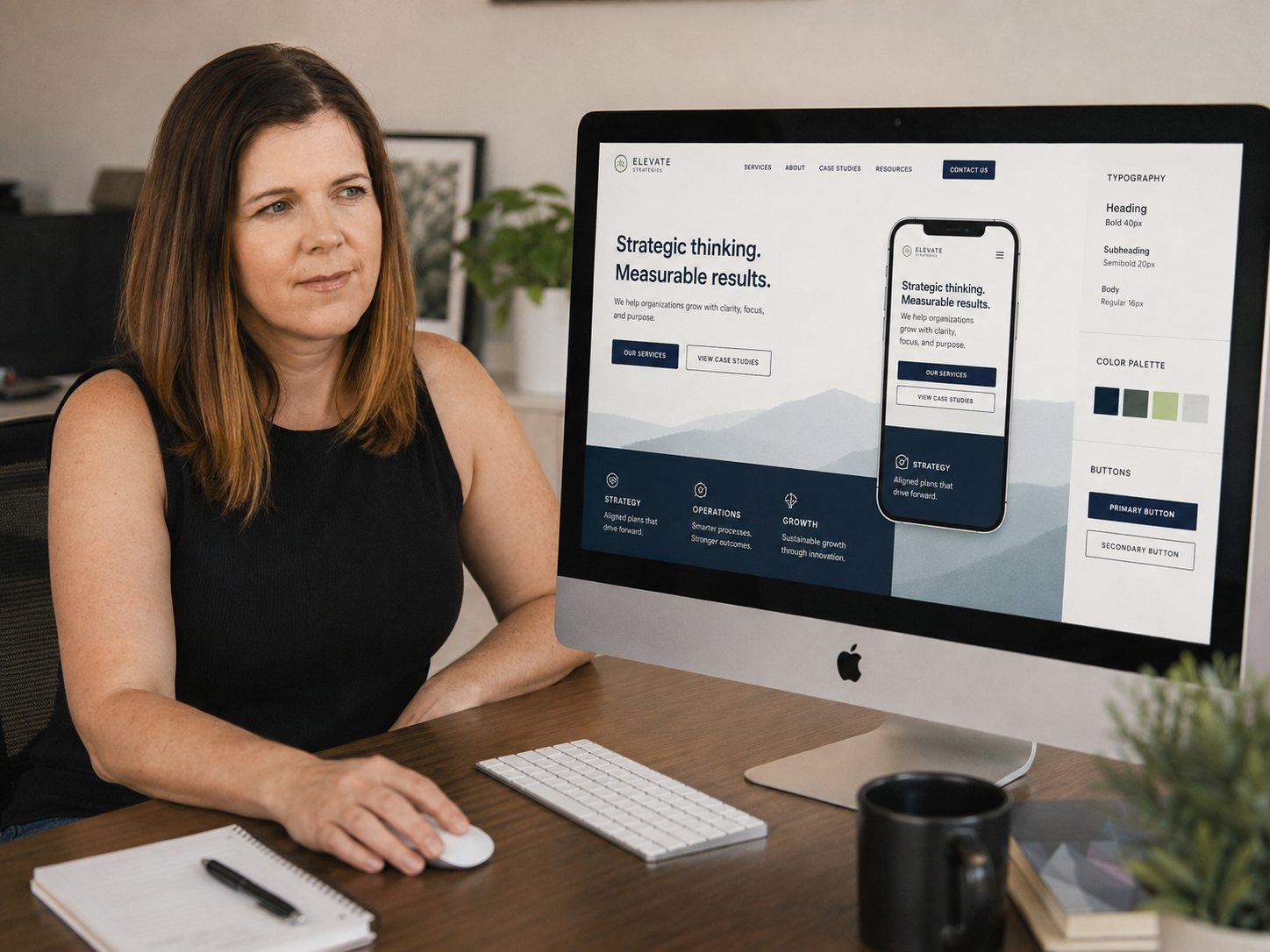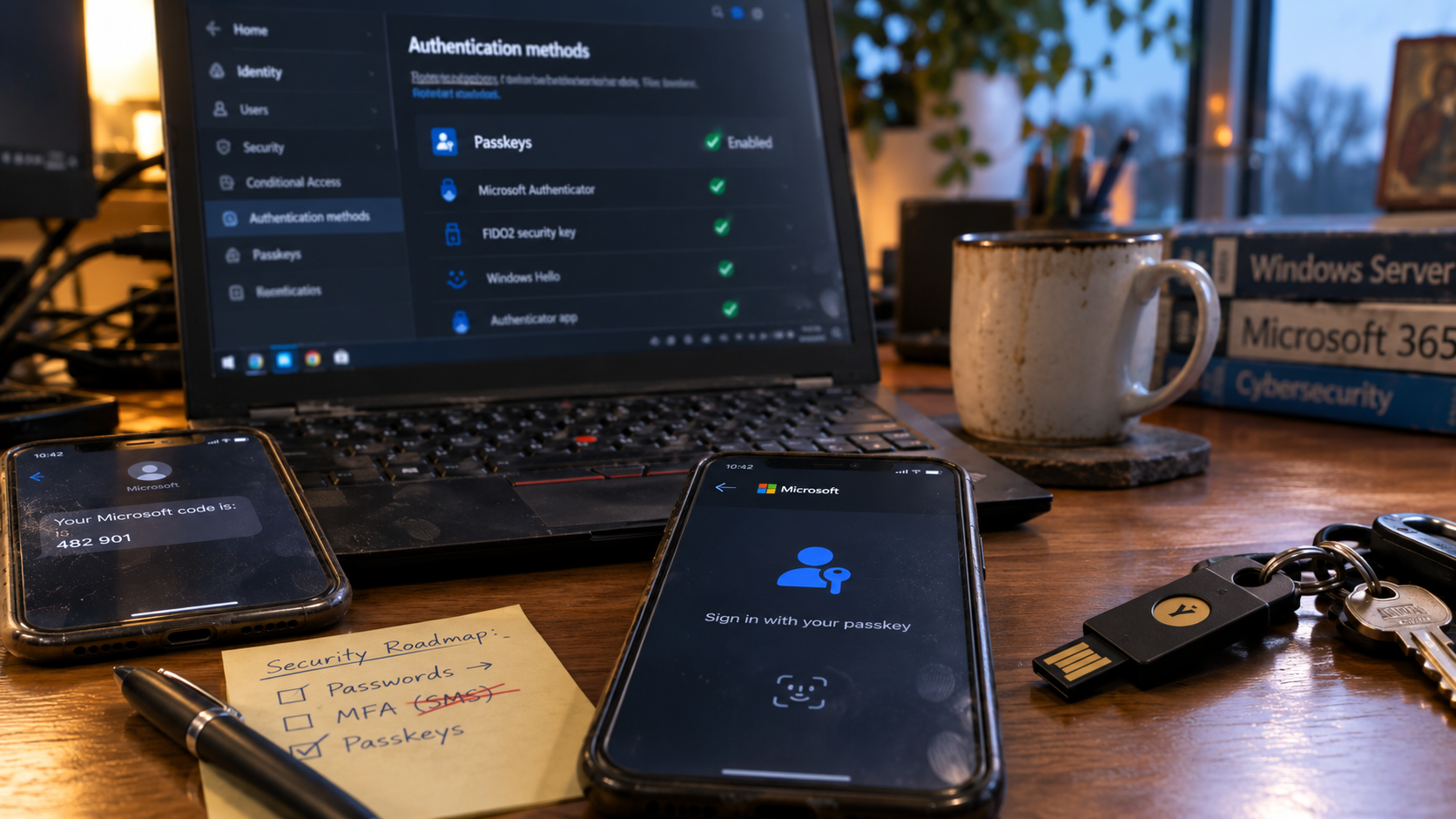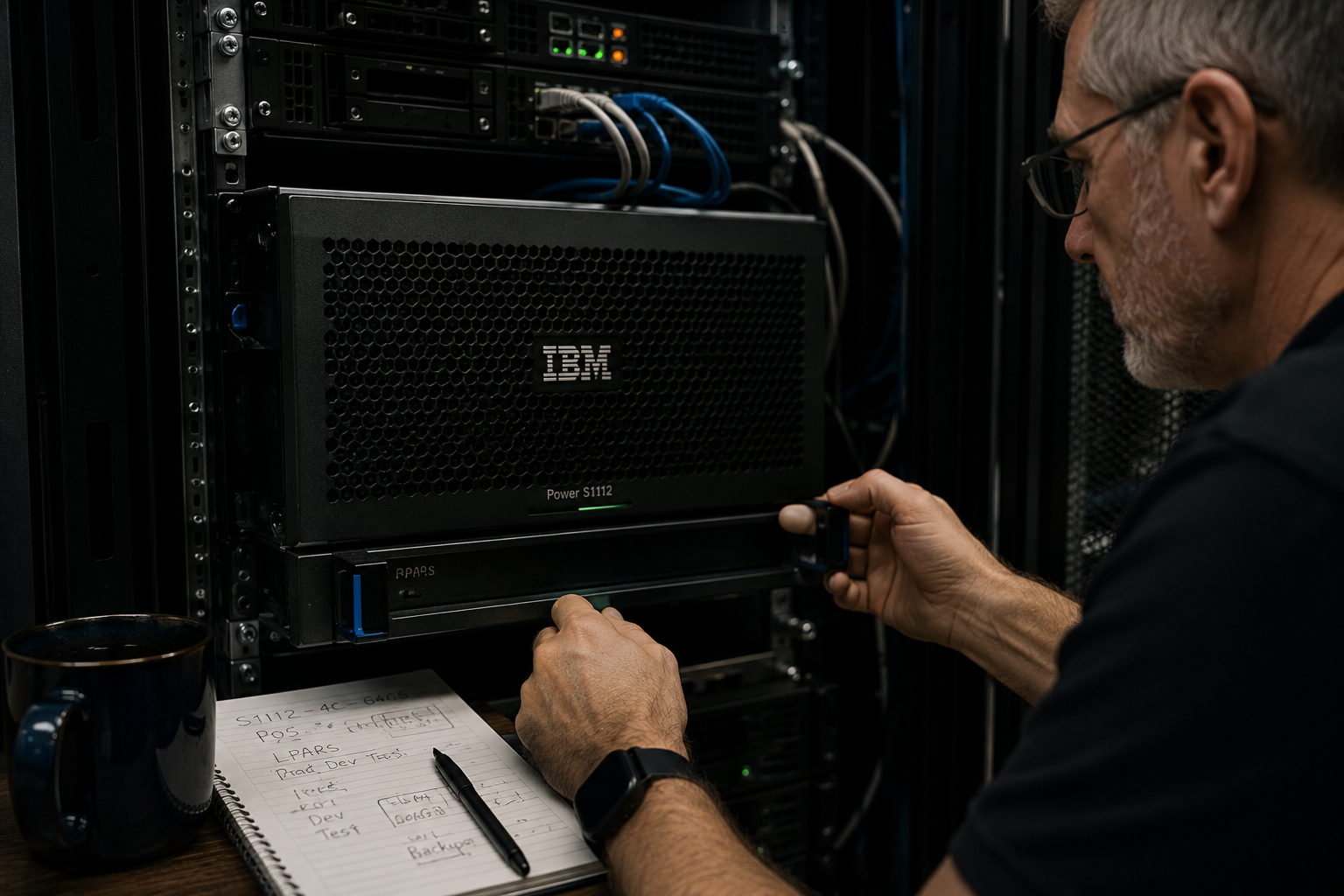
Businesses get stuck with bad metaphors. A website is one of them. People say, “We need a website,” and often what they mean is, “We need something online that proves we exist.” That used to be enough. A website was a digital brochure. A place for your phone number, services, logo, and maybe a few nice photos.
But that is not how people use websites anymore.
A business website is not just a brochure. Or, if it is a brochure, it is a brochure that also has to act as a receptionist, a salesperson, a search engine signal, a qualification filter, a customer support tool, and sometimes the front end of a much larger operational system. Which is a bit like calling the Enterprise “a vehicle.” Technically true, but you are missing most of the interesting parts.
Your website is usually the first system a customer touches
When someone lands on your website, they are usually trying to solve a problem: They need a better website. They need better SEO. They need managed IT support. They need help with social media. They need custom software because some internal process has slowly turned into a mess of spreadsheets, emails, and “only Brenda knows how this works.”
That is why, at Panda Rose, we tend to think in terms of Build, Support, and Market.
Those are not just service categories, they are connected parts of the same business reality.
- You build the thing.
- You support the thing.
- You market the thing.
Then you discover, usually very quickly, that those three things keep interacting with each other.
The website needs SEO, but SEO depends on the structure, content, speed, internal links, and technical health of the website.
The website needs hosting and maintenance, but hosting and maintenance affect performance, uptime, security, backups, and whether someone can fix things when something breaks.
The website needs to generate leads, but those leads need to go somewhere useful. Maybe into a CRM. Maybe into an email process. Maybe into a quoting workflow. Maybe into a custom system that already exists and mostly works, except for the parts that make everyone quietly miserable.
That is where custom software development and enterprise integration start to matter. The website is often just the visible part.
It is rarely the whole system.
The brochure model breaks down quickly
The brochure model says:
“Here is who we are. Here is what we do. Here is how to contact us.”
That is fine, but it is not enough. A useful business website has to answer better questions:
- What problem does this company actually solve?
- Have they helped businesses like mine?
- Do they understand the messy parts?
- Are they local?
- Are they competent?
- Are they going to make this painful?
- Will they disappear after the sale?
- Can I trust them enough to start a conversation?
That last question matters more than people think.
Many people do not contact the “best” company. They contact the company that feels safest to contact. Safest does not mean cheapest. It means competent, clear, reachable, and unlikely to waste their time. That feeling is built from small signals: a clear service page, a real phone number, useful writing, specific testimonials, relevant examples, fast load times, and a contact form that does not feel like throwing a message into the void.
None of those things are dramatic by themselves.
But they add up.
So does the opposite.
A vague website creates a vague level of trust.
Your website is part of sales
This is the part that matters if you care about money. A website is not just “marketing.” It is part of sales. That does not mean it closes every deal by itself. For a lot of the work we do at Panda Rose, the sale still needs a real conversation.
If someone is looking for managed IT support, we need to understand users, devices, backups, Microsoft 365, security, vendors, remote access, weird old systems, and the actual shape of the business.
If someone is considering custom software development, we need discovery. You cannot responsibly quote a meaningful software project from three vague sentences in a form.
If someone wants SEO or social media management, the real question is not just “Can you rank us?” or “Can you post for us?” The real question is whether the marketing effort will connect to the website, sales process, business model, and actual customers the business wants.
The website should make that first conversation easier: It should pre-educate the prospect. It should show proof. It should remove small doubts. It should make the next step obvious without being pushy.
That is one reason case studies and past work matter. A prospect who has already seen your work is in a different mental state than a prospect who has only seen claims.
Proof changes the conversation.
SEO is not magic dust
People sometimes talk about SEO like it is a magic layer you sprinkle on top of a website.
I do not think that is useful.
SEO is partly technical. Page speed matters. Site structure matters. Titles matter. Internal links matter. Whether Google can crawl the page matters. Whether old directories point to the wrong domain matters. But SEO is also about whether your website answers the questions people are already asking.
If someone searches for website development, they are not just looking for the phrase “website development” repeated a certain number of times. They are trying to figure out who can help, what the process looks like, and whether the company seems competent.
If someone searches for search engine optimization, they want rankings, yes. But they really want leads, sales, and some confidence that the monthly report is not just colourful fog.
If someone searches for social media management, they may only know that their business looks inconsistent or half-alive online.
So the content has to do two things at once: It has to be findable by search engines and it has to be worth reading by actual people.
That second part is where a lot of SEO content fails. It sounds assembled, not written. It sounds like someone took a keyword list and boiled the life out of it. I would rather have something slightly imperfect and real than something polished into uselessness.
A useful website is a graph, not a pile of pages
This is probably the math part of my brain talking, but I do not think of a website as a stack of pages. I think of it more like a graph. The homepage points to service pages. Service pages point to case studies. Case studies point back to services. Blog posts point to relevant service pages. Local pages point to the right offers. Contact pages capture intent. Analytics tells us which nodes people hit before they become a lead.
If the graph is well-built, people can move through it naturally. Not in a “red string on a conspiracy wall” way, although I admit analytics can start to feel like that sometimes, but in the sense that every useful page should make the next useful page easier to find.
That is why internal linking matters.
A post like this should point to website development. It should point to SEO because a business website should be found. It should point to managed IT because hosting, security, backups, domains, email, and support affect marketing more than people think.
It should point to custom software development and enterprise integration because sometimes the real problem is not the public website.
Sometimes the real problem is the disconnected mess behind it. That is not just an SEO trick.
It is a more accurate model of the business.
The services are connected, by default.
When the website shows those connections clearly, the visitor starts to feel something important:
“These people probably see the whole problem.”
That is a good feeling for a prospect to have.
Sometimes the website problem is not really a website problem
A business says, “We need a new website.” and maybe they do, but sometimes the website is only where the deeper problem becomes visible.
The services are unclear. The follow-up process is inconsistent. The business has three systems that do not talk to each other. Nobody knows which marketing channels produce real leads. The form goes to an inbox, then someone forwards it manually, then someone forgets, then three days later everyone wonders why marketing is not working.
Or the site gets traffic, but the offer is vague.
Or the page is good, but there is no proof.
Or there are case studies, but they are hidden.
Or social media is creating awareness, but every link goes to the homepage, so nobody knows what worked.
This is why I do not like treating websites as isolated artifacts. A website is part of a system. If the system around it is broken, the website will inherit some of that brokenness. That is not a reason to avoid the website project.
It is a reason to do it properly.
Build. Support. Market. is practical
When we say Build. Support. Market., I do not mean it as a slogan floating above the work.
I mean it as a practical sequence.
- Build the website, software, integration, or system properly.
- Support it so it does not rot, break, slow down, lose data, get hacked, or become impossible to maintain.
- Market it so the right people can find it, understand it, and act on it.
You can start at any point in that sequence, but sooner or later all three matter. If you build without support, things decay. If you support without marketing, the business may be stable but invisible. If you market without building properly, you send traffic into a weak or broken system. That is a little like opening a portal before checking what is on the other side. Entertaining in an MCU movie. Less entertaining when it is your lead flow.
The pieces have to fit and that is the part I care about.
A business website should be measurable
This is another place where the brochure metaphor fails.
You do not expect a printed brochure to tell you much. Maybe you handed out 500 of them. Maybe someone called. Maybe not.
A website should give you more information than that.
At minimum, a business should be able to tell:
Which pages are people visiting?
Which services are getting interest?
Which blog posts are attracting search traffic?
Which pages lead to contact forms?
Which calls came from the website?
Which campaigns produced real leads?
Which leads became proposals?
Which proposals became money?
That last part matters.
Traffic is not the goal.
Leads are closer.
Qualified leads are better.
Proposals are better again.
Paid work is the real test.
You do not need perfect tracking to improve things. Perfect tracking can become a procrastination strategy. But you need enough tracking to stop guessing.
Enough to say, “This page is working,” or “This channel is wasting time,” or “People care about this service more than we expected,” or “We are getting traffic, but the offer is not clear enough.”
That kind of information changes decisions.
It makes the website part of management, not just marketing.
Marketing, IT, and software are closer than people think
People often put marketing on one side and IT on the other. That division makes sense on an org chart. It makes less sense in real life. Marketing wants landing pages, forms, analytics, tracking scripts, email automation, SEO tools, and social links. IT cares about hosting, DNS, security, uptime, backups, access, domains, email deliverability, and who has admin rights.
Those worlds touch constantly.
If DNS is a mess, marketing suffers.
If the site is slow, marketing suffers.
If forms are unreliable, marketing suffers.
If email deliverability is bad, marketing suffers.
If nobody knows who owns the domain, marketing suffers.
If there are old versions of the business name and website floating around directories, local SEO suffers.
So yes, managed IT support and digital marketing are different services. But in a real business, they are part of the same operating environment.
The same is true for software.
If your website brings in leads, but your internal systems make it hard to quote, schedule, fulfill, or follow up, then the growth problem has simply moved downstream. That is when enterprise integration matters.
The practical question
The practical question is not, “Do we have a website?” Most businesses have a website. The better question is:
“Is our website helping the business move?”
“Is it helping people find us?”
“Is it helping people trust us?”
“Is it helping people understand what we do?”
“Is it helping the sales conversation start in a better place?”
“Is it connected to the systems we actually use?”
“Is it supported properly?”
“Is it measurable?”
“Is it making money, or at least clearly helping create the conditions for making money?”
If the answer is no, or “sort of,” that is not a disaster, it is useful information. It means the website has room to become more than a brochure. It can become a business system. Once you think about it that way, the work becomes clearer. You are not just changing colours, rewriting a few paragraphs, and hoping Google likes it. You are building a path: from search to trust, from trust to contact, from contact to conversation, from conversation to proposal, from proposal to real work.
That is what a website should be doing.
And if yours is not doing that yet, that is a good place to start. Not sure whether this is a website problem, SEO problem, IT problem, or systems problem? That is usually the point. We can help you sort out what should be fixed first.
If you want a practical review of where your website is helping and where it is just sitting there, Panda Rose can look at the site, the SEO, the analytics, the forms, the hosting, the follow-up path, and the business systems around it.
Start with a Website Growth Audit, and we can help you figure out what should be fixed first.